Private LLM development inside your network

Custom LLMs on open models, tuned on your data and run on your own servers, so nothing leaves your network.

Private LLMs we build

The six setups we deliver most often, and any other your data rules call for.

  1. 01 / 06

    On-premise and air-gapped LLMs

    Open models running on your own servers, with no route to the internet where your rules demand it.

    • GPU servers sized and set up in your data centre
    • Air-gapped installs, with models and updates brought in offline
    • No connection to outside AI services
    • Behind your firewall and single sign-on
  2. 02 / 06

    Private cloud LLMs

    Models served from your own cloud account, in the region your data has to stay in.

    • In your own cloud account and network, not ours
    • In the region your data must stay in
    • Private endpoints, with no public route to the model
    • GPUs scaled up and down with demand
  3. 03 / 06

    Hybrid: private and hosted models

    A private model for sensitive and high-volume work, and a hosted frontier model only for what it does better.

    • Each request routed by the data it carries
    • Sensitive data kept on the private model
    • A hosted model for the hardest reasoning, where allowed
    • One API for your apps, whichever model answers
  4. 04 / 06

    Fine-tuned and custom models

    Open models adapted to your documents, terms and formats, and smaller models trained for a single job.

    • LoRA fine-tuning on your own examples
    • Small models for one task, cheaper to run
    • Further training on your own text where it pays
    • Scored against the base model before it ships
  5. 05 / 06

    Private RAG, assistants and agents

    Document search, assistants and AI agents built on the private model, so your data stays in your network end to end.

    • Answers from your documents, with their sources
    • Assistants for legal, finance, HR and support teams
    • Agents that act in your systems on the private model
    • The same sign-in and permissions as your tools
  6. 06 / 06

    Run, monitored and kept current

    The model kept fast, affordable and up to date after launch, with every request accounted for.

    • Throughput, latency and GPU load monitored
    • Quantisation and batching tuned to cut cost
    • New open models tested before they replace the old
    • Usage and audit logs for every team

Our private LLM development process

Six steps, from what the model has to do to a model your team uses every day on your own hardware.

  1. 01Scope

    Your use cases, data and compliance, and what it costs against a hosted API.

  2. 02Plan

    Open models tested on your cases and one chosen, with the hardware sized on-premises or in a private cloud.

  3. 03Build

    Fine-tuned or given retrieval where it pays, and connected to your apps.

  4. 04Test

    Accuracy, latency and hallucinations measured, with access and audit controls checked.

  5. 05Launch

    Served behind your own gateway, with single sign-on and monitoring.

  6. 06Maintain

    Model updates, patches and on-call, or a handover to your own team.

Private LLM features

What we build into a private model, set for where it runs and who uses it.

  • Network isolation

    No calls to outside AI services: prompts, files and answers stay on infrastructure you control.

  • A standard API your apps already speak

    An OpenAI-compatible endpoint, so existing tools and code switch over by changing one address.

  • Single sign-on and roles

    People sign in with your single sign-on, and each team reaches only the models and data it should.

  • Audit log

    Who asked what, when, and which model answered, kept in a log you own.

  • Usage limits per team

    Quotas on requests and tokens for each team or app, so one workload can't starve the rest.

  • Sized to your hardware

    Models quantised and batched to fit the GPUs you have, without falling below the quality bar.

  • Model re-benchmarking

    Each new open model scored on your cases, and swapped in only when it wins.

  • Monitoring and alerts

    Throughput, latency, errors and GPU load tracked, with alerts before your users notice.

  • Red-team testing

    Prompt injection, data leaks and access rules tested before launch and after every change.

Ways to start

Starting something new with AI, or adding it to software you already have.

Something new

  • Build a first version

    An AI MVP with the features that matter most, to launch and learn.

  • Build the whole product

    An AI product designed, built and launched in full, by one team.

  • Extend your team

    AI engineers join your team, or a dedicated team runs the work.

Software you already have

Industries we build software for

Custom software development across industries: web, mobile and AI applications, built and security-audited by one team.

  • A modern hospital patient room in the evening, a made bed beside a patient monitor and an IV stand

    Healthcare & MedTech

    Healthcare and medical software development: patient portals, telemedicine apps, EHR integrations and clinical dashboards.

  • A phone showing a mobile banking app beside a black metal payment card on a stone table

    Fintech & Payments

    Fintech and payment app development: digital wallets, payment gateways, mobile banking apps and lending platforms.

  • A streetwear store with a wall of hoodies and jerseys, a lit sneaker wall and a terrazzo display of tees and caps

    Retail & Ecommerce

    Ecommerce development for online stores, mobile shopping apps, point-of-sale software and inventory management.

  • A brass luggage trolley with suitcases and a coat in a modern hotel lobby, beside the reception desk

    Travel & Hospitality

    Travel and hospitality software: booking engines, hotel management systems, travel apps and supplier integrations.

  • A robotic assembly line in a smart factory, with robot arms in glass cells and autonomous robots carrying parts

    AI & Automation

    AI development and AI automation: AI agents, chatbots, document processing and automated business workflows.

  • A software team's studio with a product roadmap of sticky notes on a whiteboard above a shared desk

    SaaS & Marketplaces

    SaaS and marketplace development: multi-tenant platforms, subscription billing, user roles and vendor payouts.

  • Parcels on a conveyor in a fulfilment warehouse, with tall pallet racking and a forklift behind

    Logistics & Supply Chain

    Logistics and supply chain software: fleet and warehouse management, route planning and shipment tracking.

  • A university library atrium with study tables, glass study rooms and a recording room beneath tiers of bookshelves

    Education & EdTech

    EdTech and education app development: learning management systems, e-learning platforms, virtual classrooms and assessments.

  • A secured glass door with a fingerprint reader beside a long data centre aisle of server racks

    Cybersecurity

    Cybersecurity software: identity and access management, SIEM dashboards and compliance tooling, plus security audits and penetration testing.

  • A newly built apartment's living room and kitchen at dusk, floor-to-ceiling windows onto residential towers and a tower crane

    Real Estate & PropTech

    Real estate and PropTech software development: property management systems, listing portals, agent CRMs and tenant apps.

  • A law firm's double-height library at dusk, a long walnut meeting table laid with a contract, a fountain pen and case binders

    Legal & LegalTech

    Legal software development: case and contract management, legal document management and eDiscovery tools.

  • An esports arena before a final, a fantasy battle map on the giant screen above two lit team desks and a silver cup on a plinth

    Gaming & Esports

    Gaming and esports software: game backends, multiplayer matchmaking, tournament platforms, player accounts and in-game payments.

We also build software for insurance (insurtech), government (govtech), energy and media. If your industry is not listed, we can still build for it.

Software we run in production

Three products of our own, designed, built and kept running by the team that would deploy your private LLM.

  • Retail · SaaS

    A point-of-sale system that keeps sales, stock and receipts together on till, tablet and phone.

    Screen capture, 1908 × 944
  • Travel

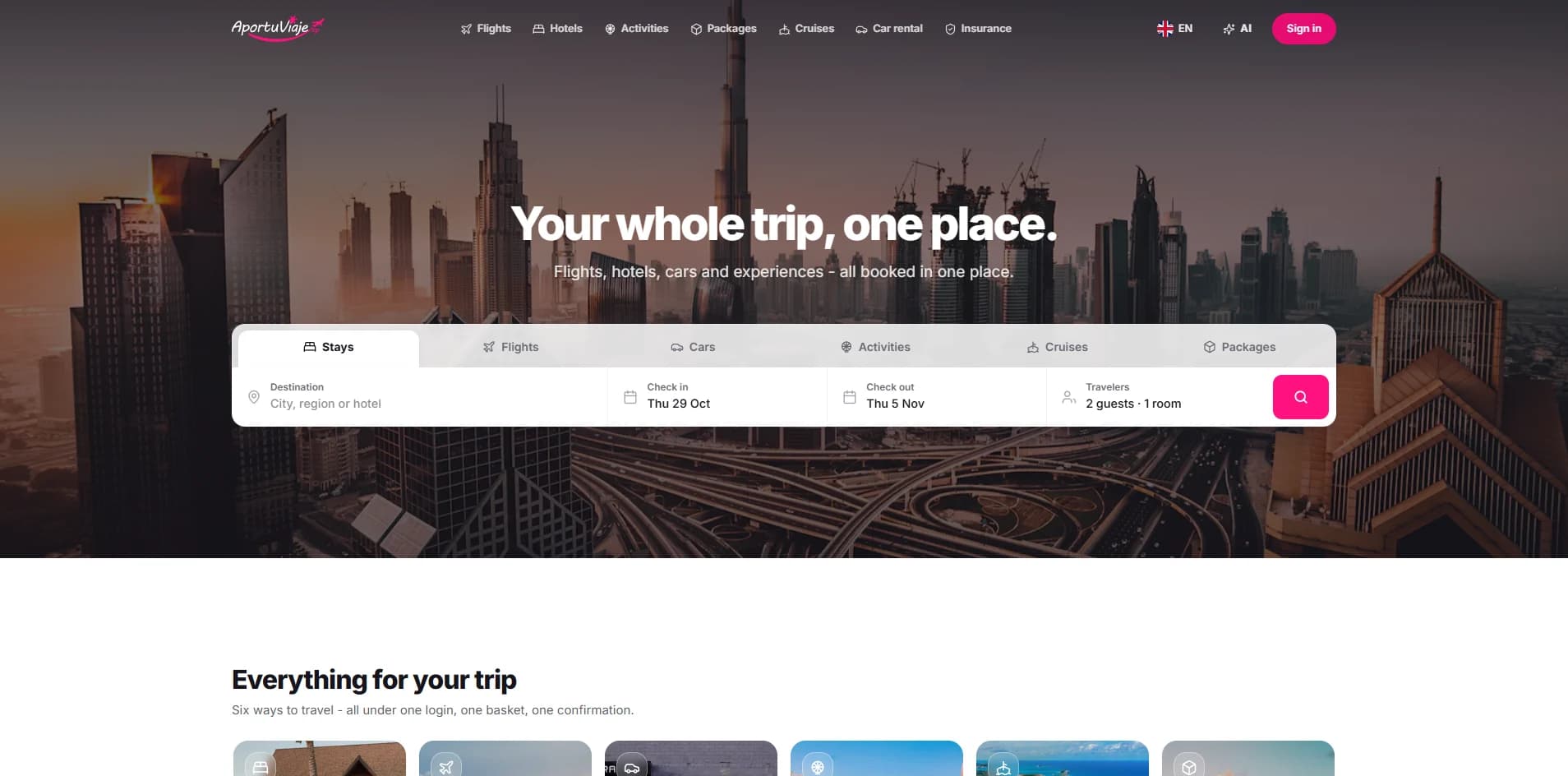
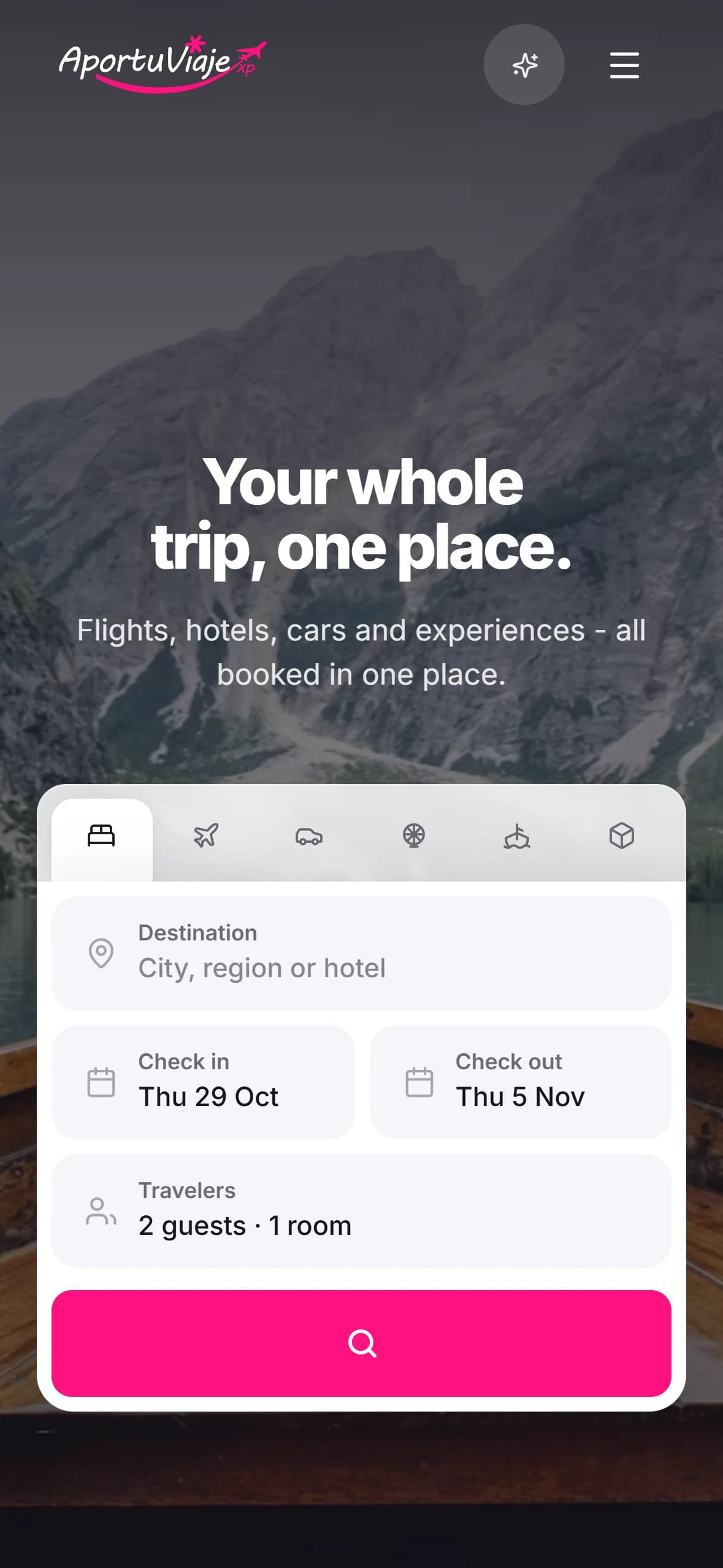
    A travel booking app whose AI assistant finds flights, hotels and trip ideas, through to a confirmed booking.

  • AI

    Silvia AI

    An AI assistant for customer support and sales that answers questions and guides buyers.

    Screen capture, 1908 × 944

Questions about private LLMs

What teams ask before they run a model on their own infrastructure, answered plainly.

Ask your own
When is a private LLM better than an AI API?

When your data can't go to an outside provider, when your volume makes per-token pricing expensive, or when you need control over speed and uptime. For a prototype, or for the hardest reasoning, a hosted API is often the better start, and we'll say so. Many teams end up hybrid: private for sensitive and routine work, hosted for the rest.

Can it run on our own servers, or with no internet at all?

Yes. We deploy on-premise, in your own cloud account or fully air-gapped. For an air-gapped install, the models, their dependencies and every update are brought in offline, and the servers have no route out.

Which open models do you use, and are they as good as GPT or Claude?

Llama, Qwen, Mistral, Gemma and DeepSeek, among others. The best open models now match hosted ones on many everyday tasks, and a fine-tuned model can beat them on yours — but not on everything. We test candidates on your own examples first, so you see the gap before you decide.

What hardware do we need?

It depends on the model's size and your traffic. A small model runs on a single GPU; a large one needs several, or a quantised version that fits on fewer. We size the hardware to your workload before anything is bought, and can work with servers you already have.

Do we need fine-tuning, or is RAG enough?

For answering from your documents, RAG is usually enough, and it keeps facts current. Fine-tuning suits a format, a tone or a narrow task, and lets a smaller model do a bigger one's job. Training a model from scratch is rarely worth it; we'll tell you if your case is the exception.

What data does fine-tuning need, and where does it go?

Usually a few hundred to a few thousand good examples of the task, which we help you collect and clean. Training runs on your infrastructure or in your cloud account, so the data never leaves it, and personal data can be removed first.

Can it work with our documents and systems?

Yes. The model serves an OpenAI-compatible API, so most tools and code connect as they are. On top of it we build private RAG over your documents, assistants for your teams and AI agents that act in your systems.

How is our data protected?

Prompts, files and answers stay inside your network. People sign in through your single sign-on, each team reaches only what it should, every request is logged, and the deployment is tested for prompt injection and data leaks before launch.

Who owns the model and the code?

Usually you do: for client work, the fine-tuned weights, the training data, the code and the configuration are yours, as set out in our agreement, and run on infrastructure you control. Open model licences differ, and we check that each one fits your use.

How long does it take, and what does it cost?

Testing models on your cases and sizing the hardware takes one to two weeks, a first deployment two to six, and fine-tuning a few weeks more where it pays. Running cost is mostly the hardware or cloud GPUs, a fixed cost rather than a bill per token. After a first call we send a written estimate.

Describe your project. Get an estimate.